
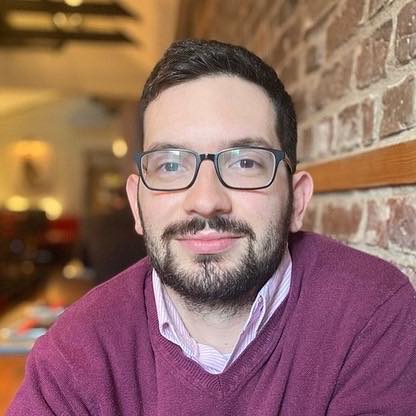
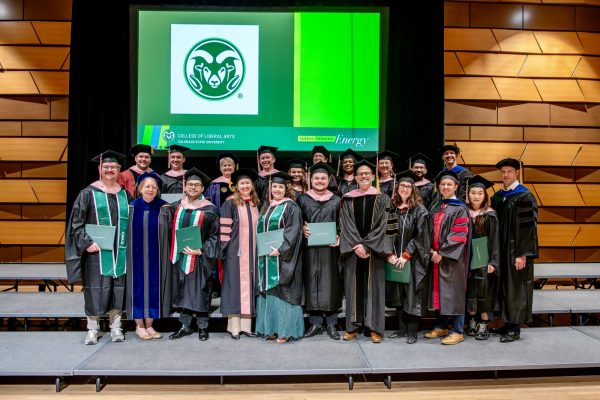
Recent graduate, Paul Haarala (CSU ’25, M.M., Music Education) sat down with us to reflect on his music education journey so far.
 Since your undergraduate music education degree focused on band, what prompted you to focus on strings for your master’s degree?
I was absolutely certain I was going to be the world’s best high school band director once I left Furman University. That image was shattered during my first job, teaching middle school orchestra in South Carolina. While it was uncomfortable at first, it turned out to be the best thing that has happened to me. I fell in love with teaching orchestra, started taking violin lessons, and found myself reading pedagogy books to fill in any gaps in my knowledge. Once I had done everything I could on my own, I decided it was time to go back to school.
What do you enjoy about teaching strings?
I enjoy teaching music generally, but I have always been drawn to the orchestral repertoire. Beyond that, teaching strings feels very intuitive to me because everything is visual – most of the time, if there is an issue, you don’t only hear it, but there is a visual representation of what is going wrong (e.g., the bow isn’t being drawn parallel to the bridge). On top of that, as I learned to play violin and viola alongside my students, I was experiencing similar struggles, so it was a lot easier for me to put myself in the perspective of my students and help guide them through those challenges.
How did your advanced study of tuba help you learn violin and viola?
I don’t believe that a music teacher can be truly effective if they are not a great musician. While I didn’t have the pedagogical knowledge of string technique, I had worked diligently in my undergraduate degree to develop my musicianship. I was about to pursue a graduate performance degree before I decided to teach because of how much I valued performing at a high level. Because of the work I put in on my musicianship on tuba, my progress as a violinist/violist went fairly quickly. I don’t think I would be at the level of playing on violin/viola that I am today if I hadn’t established a strong foundation on my primary instrument.
What do you find challenging about playing a stringed instrument as an adult beginner?
From my perspective, the norm is for string players to start very early in their lives. Starting from an early age has so many benefits that make musicianship and playing a stringed instrument as natural as speaking your native language. The biggest challenge I’ve faced is constantly feeling like I am behind. I have met incredible teachers who are so fluent on their instrument that it translates so naturally into their teaching. Adults carry many more expectations than young students, so from my experience, the mental barrier is the biggest challenge.
What is the hardest part of teaching a stringed instrument?
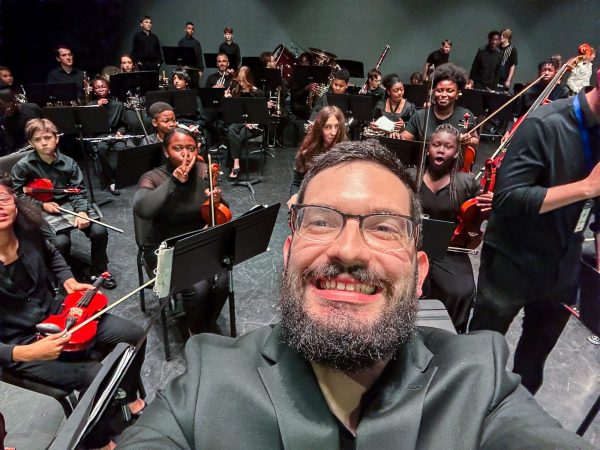
Teaching beginners reveals how complex playing a string instrument truly is. It is a difficult balance to scaffold this setup in a way that creates a solid foundation but is still engaging for the student. Having patience with beginners to ensure that the setup is correct is so important; otherwise, bad habits will make progress extremely difficult later. As students get older, it takes a lot of insistence, careful thought, and re-learning to repair bad habits. I unfortunately learned this lesson the hard way (apologies to my students from my first year of teaching!).
With differing opinions about how to teach strings, what do you embrace?
One of the benefits of not growing up within the string community is that I don’t have any particular allegiance to one method. In fact, my graduate studies have shown me that it is important to have a healthy blend of many different approaches. Some common themes I have noticed across pedagogies involve careful scaffolding, building community, and encouraging student ownership. I don’t think there is value in arguing about finger tapes vs. no finger tapes, Bornoff vs. Suzuki, or the best repertoire. It is more important to have a variety of strategies to help a student reach their goals.
How do you level the playing field for younger students who cannot afford instruments and private lessons?
I am a big advocate that money should not be a reason for students not to participate in orchestra. I taught at two Title I schools in South Carolina, and in both of those, I made sure to have an inventory of school-owned instruments. As for lessons, I always taught with the assumption that students did not take private lessons or practice at home. Some of my students had many siblings, lived in small spaces, or had parents who worked the night shift. Practicing at home was not an option for them, so I provided the space for students to practice in class once a week.
What path will you take following graduation? For instance, will you be innovative in your approach or choice of repertoire?
That is hard to say. I do believe that my prior experience gives me a unique perspective, but I won’t know until I am back in the field. My undergraduate education helped me establish a very “traditional” approach to teaching ensemble classes, but my graduate studies have helped expand my understanding into a more holistic approach. My main hope is to incorporate a lot of opportunities for student leadership, peer interaction, and to expose them to a wide variety of music. I believe that students need to know the expectations, be given the opportunity to create their own path to get there, and do it in collaboration with their peers.
What would you like students to take away from your classes?
I am fully aware that only a minority of music students go on to pursue a profession in music. I hope to promote a love of music that they can carry with them into their life, regardless of profession. Classical music is not the only way to engage with music, but I do believe that learning its fundamentals can set them up to have a deeper understanding of whatever form of music they feel most passionate about. I want my students to have a deeper appreciation, but also be able to make music in a way that is meaningful to them if they want to.
How have you promoted or how will you promote lifelong learning?
I think my trajectory into the profession definitely speaks for itself. The minute I took an orchestra director position, I started taking private lessons. I would pick a different instrument each week to play alongside my kids, and I was very transparent about the fact that I was learning along with them. I have met many wonderful colleagues who have patiently tolerated my constant questions about various orchestra and teaching-specific topics. I am a patchwork of all the knowledge that I have acquired since entering the profession. The minute that learning stops for me, I don’t believe I can be an effective teacher.
Who do you consider an innovative teacher, and how did they change the way you think about teaching?
I think the biggest mental shift that I’ve had while studying with Dr. Erik Johnson is the idea that the more that students have control over their own learning, the more they will actually learn and be more engaged. Students can surprise you with how creative, insightful, and intelligent they are capable of being when they are provided the opportunity. The orchestra truly belongs to the students, and the teacher’s role is to put on guard rails, guide them towards making intelligent decisions, and empower them to transform the program into what they want it to look like.
Who has been an influential teacher and why?
I will always look to Dr. Leslie Hicken [Professor Emeritus and the Charles E. Daniel Professor of Music, Furman University], who embodied true professionalism and commitment to excellence. Somehow, he struck the perfect balance of not accepting anything less than our best while also being our biggest advocate. I also cannot answer this question without referencing my former private teacher, Mike Taylor [currently, instructor of euphonium and tuba, North Greenville University], with whom I studied for over 10 years. I am the musician I am today because of the high standards that he pushed me towards since the start of my musical journey.
Describe a pivotal moment at CSU?
Mentoring the undergraduate music education students has now become my absolute favorite part of this degree, and it has nothing to do with my coursework. Watching others learn and grow has not only been intrinsically enjoyable, but it has also reminded me of my own journey through the profession. Prior to mentoring these students, I hadn’t realized how much I had actually grown as a pedagogue since my undergraduate degree. I’ve learned a lot through my graduate studies, but I don’t think any of it would have stuck without the renewed confidence in my teaching that I’ve gained through mentoring the undergraduate students.